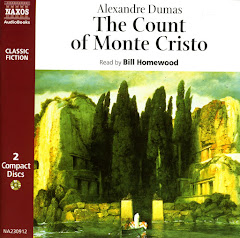
The Count of Monte Cristo
Alexandre Dumas
มิ.ย. 2004 · Naxos AudioBooks · บรรยายโดย Bill Homewood
star
3 รีวิว
headphones
หนังสือเสียง
2 ชม. 38 นาที
ฉบับย่อ
ต้องการดูตัวอย่างระยะเวลา 4 นาที ฟรีไหม ฟังได้ทุกเมื่อแม้ขณะออฟไลน์
เพิ่ม
เกี่ยวกับหนังสือเสียงเล่มนี้
The Count of Monte Cristo is a tale of revenge and retribution. Edmond Dant�s, a young, energetic sailor, is falsely accused of treason on his wedding day and incarcerated in the forbidding Ch‰teau dÕIf. His escape and ultimate revenge on those who wronged him makes this one of the most thrilling stories in French literature, as compelling now as when it was first published in 1846.
The Count of Monte Cristo is a tale of revenge and retribution. Edmond Dant�s, a young, energetic sailor, is falsely accused of treason on his wedding day and incarcerated in the forbidding Ch‰teau dÕIf. His escape and ultimate revenge on those who wronged him makes this one of the most thrilling...
สำรวจหนังสือเล่มอื่นๆ
การให้คะแนนและรีวิว
3 รีวิว
เกี่ยวกับผู้แต่ง
After an idle youth, Alexandre Dumas went to Paris and spent some years writing. A volume of short stories and some farces were his only productions until 1927, when his play Henri III (1829) became a success and made him famous. It was as a storyteller rather than a playwright, however, that Dumas gained enduring success. Perhaps the most broadly popular of French romantic novelists, Dumas published some 1,200 volumes during his lifetime. These were not all written by him, however, but were the works of a body of collaborators known as "Dumas & Co." Some of his best works were plagiarized. For example, The Three Musketeers (1844) was taken from the Memoirs of Artagnan by an eighteenth-century writer, and The Count of Monte Cristo (1845) from Penchet's A Diamond and a Vengeance. At the end of his life, drained of money and sapped by his work, Dumas left Paris and went to live at his son's villa, where he remained until his death.
After an idle youth, Alexandre Dumas went to Paris and spent some years writing. A volume of short stories and some farces were his only productions until 1927, when his play Henri III (1829) became a success and made him famous. It was as a storyteller rather than a playwright, however, that Dum...
ให้คะแนนหนังสือเสียงนี้
แสดงความเห็นของคุณให้เรารับรู้
ข้อมูลการฟัง
สมาร์ทโฟนและแท็บเล็ต
ติดตั้งแอป Google Play Books สำหรับ Android และ iPad/iPhone แอปจะซิงค์โดยอัตโนมัติกับบัญชีของคุณ และช่วยให้คุณอ่านแบบออนไลน์หรือออฟไลน์ได้ทุกที่
แล็ปท็อปและคอมพิวเตอร์
คุณสามารถอ่านหนังสือที่ซื้อจาก Google Play โดยใช้เว็บเบราว์เซอร์บนคอมพิวเตอร์ของคุณ


