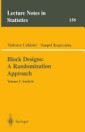
ამ ელწიგნის შესახებ
The book opens with some basics on reproducing kernels, and builds up to more advanced topics, including bounds for the number of cubature formula points, equivalence theorems for statistical optimalities, and the Sobolev Theorem for the cubature formula. It concludes with a functional analytic generalization of the above classical results.
Although it is intended for readers who are interested in recent advances in the construction theory of optimal experimental designs, the book is also useful for researchers seeking rich interactions between optimal experimental designs and various mathematical subjects such as spherical designs in combinatorics and cubature formulas in numerical analysis, both closely related to embeddings of classical finite-dimensional Banach spaces in functional analysis and Hilbert identities in elementary number theory. Moreover, it provides a novel communication platform for “design theorists” in a wide variety of research fields.
აღმოაჩინეთ მეტი
ავტორის შესახებ
Masanori Sawa received his M.S. degree in Mathematics from Hiroshima University in 2005 and Ph.D. degree in Information Science from Nagoya University in 2007. He was a postdoctoral fellow with the Japan Society for the Promotion of Science, a lecturer at the Takamatsu National College of Technology, and an Assistant Professor at Nagoya University. He has been an Associate Professor at the Graduate School of System Informatics, Kobe University, Japan, since 2014. His current research interests include algebraic combinatorics, numerical analysis and mathematical statistics.
Masatake Hirao received his M.S. and Ph.D. degrees in Information Science from Nagoya University, Japan, in 2006 and 2010, respectively. He has been an Associate Professor at the School of Information and Science Technology, Aichi Prefectural University, Japan, since 2014. His research interests are mathematical statistics, probability theory, combinatorics and numerical analysis.Sanpei Kageyama has been a Visiting Professor of Statistics and Discrete Mathematics at the Research Center for Mathmatics and Science Education, Tokyo University of Science, Japan, since 2016. He is now an Emeritus Professor of Hiroshima University. He has published over 340 articles in scientific journals. He was a Foundation Fellow of the Institute of Combinatorics and its Applications, and a council member of the Mathematical Society of Japan, the Japan Statistical Society, and Japanese Society of Applied Statistics. He has also served on the editorial boards of Utilitas Mathematics, Journal of Statistical Planning and Inference, Discussiones Mathematicae, Sankhya, and the Journal of Statistics and Applications.
span="" arial","sans-serif";mso-ascii-font-family:calibri;mso-ascii-theme-font:major-latin;="" inference,="" discussiones="" mathematicae,="" sankhya,="" statistics="" applications./pp/pspan="" arial","sans-serif";mso-ascii-font-family:calibri;mso-ascii-theme-font:major-latin;="" inference,="" discussiones="" mathematicae,="" sankhya,="" statistics="" applications.p/pp/pspan="" arial","sans-serif";mso-ascii-font-family:calibri;mso-ascii-theme-font:major-latin;="" inference,="" discussiones="" mathematicae,="" sankhya,="" statistics="" applications.p/pp/pspan="" arial","sans-serif";mso-ascii-font-family:calibri;mso-ascii-theme-font:major-latin;="" inference,="" discussiones="" mathematicae,="" sankhya,="" statistics="" applications.p/pp/pspan="" arial","sans-serif";mso-ascii-font-family:calibri;mso-ascii-theme-font:major-latin;="" inference,="" discussiones="" mathematicae,="" sankhya,="" statistics="" applications.p/pp/pspan="" arial","sans-serif";mso-ascii-font-family:calibri;mso-ascii-theme-font:major-latin;="" inference,="" discussiones="" mathematicae,="" sankhya,="" statistics="" applications.p/p