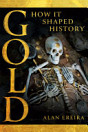
Gold: How it Shaped History
พ.ย. 2024 · Casemate Publishers
eBook
496
หน้า
family_home
มีสิทธิ์
info
เกี่ยวกับ eBook เล่มนี้
Explores gold's profound influence throughout history, revealing its role in shaping civilizations, driving wars, and transforming societies beyond mere wealth and art. Gold is not what we think. It is usually discussed in the context of wealth and art but this book has a broader subject, so fundamental that it has been largely unremarked. Informed by a mass of recent discoveries and a South American indigenous perspective, it offers a new way of understanding the history of civilization. Gold has been coinage, treasure and adornment. But it has been much more, as the hidden driver of wars and revolutions, the rise and fall of empires and the transformation of societies. As the sun traveled east to west across the sky, gold, incorruptible and corrupting, flowed west to east, hand to hand across the world. That flow has brought empires to grow and collapse and driven plunder, conquest and colonization. It brought about wars and revolutions, empowered new forms of arts and science and created the capitalist consumer economy that dominates us now. All the gold people ever shaped still exists, shining as new; it can be mislaid but never decays. Right from its first appearance on the west shore of the Black Sea, long before the rise of Egypt and Mesopotamia, gold crowned the first proto-king. Ever since, it has been regarded as value incarnate with transcendental power. The quantity we take has been increasing steadily for 6,500 years. Now extraction accelerates. Our gold mountain has doubled in the last fifty years. Yet its price increases faster. While the quantity doubled, its buying power multiplied by six. What does gold do that makes us want it so much? As Alan Ereira reveals in this skilfully woven narrative, gold is the hidden actor that shapes our story.
Explores gold's profound influence throughout history, revealing its role in shaping civilizations, driving wars, and transforming societies beyond mere wealth and art. Gold is not what we think. It is usually discussed in the context of wealth and art but this book has a broader subject, so fund...
สำรวจหนังสือเล่มอื่นๆ
เกี่ยวกับผู้แต่ง
Alan Ereira is a professor of Practice at the University of Wales, Trinity Saint David and is also the founder/chairman of the Tairona Heritage Trust, working to amplify the voice of the Kogi (Kaggaba) people of the Sierra Nevada de Santa Marta, Colombia. He is an award winning producer and director of many historical documentaries, mostly for the BBC, and worked closely for many years with Monty Python’s Terry Jones. His work is now mostly focussed on historical writing. He is the author of The Nine Lives of John Ogilby (Duckworth), The Elder Brothers’ Warning (Tairona Heritage Trust), The People’s England and The Invergordon Mutiny (Routledge), Crusades (Penguin, BBC Books), Mediaeval Lives and Barbarians (BBC Books)
Alan Ereira is a professor of Practice at the University of Wales, Trinity Saint David and is also the founder/chairman of the Tairona Heritage Trust, working to amplify the voice of the Kogi (Kaggaba) people of the Sierra Nevada de Santa Marta, Colombia. He is an award winning producer and direc...
ให้คะแนน eBook นี้
แสดงความเห็นของคุณให้เรารับรู้
ข้อมูลในการอ่าน
สมาร์ทโฟนและแท็บเล็ต
ติดตั้งแอป Google Play Books สำหรับ Android และ iPad/iPhone แอปจะซิงค์โดยอัตโนมัติกับบัญชีของคุณ และช่วยให้คุณอ่านแบบออนไลน์หรือออฟไลน์ได้ทุกที่
แล็ปท็อปและคอมพิวเตอร์
คุณฟังหนังสือเสียงที่ซื้อจาก Google Play โดยใช้เว็บเบราว์เซอร์ในคอมพิวเตอร์ได้
eReader และอุปกรณ์อื่นๆ
หากต้องการอ่านบนอุปกรณ์ e-ink เช่น Kobo eReader คุณจะต้องดาวน์โหลดและโอนไฟล์ไปยังอุปกรณ์ของคุณ โปรดทำตามวิธีการอย่างละเอียดในศูนย์ช่วยเหลือเพื่อโอนไฟล์ไปยัง eReader ที่รองรับ