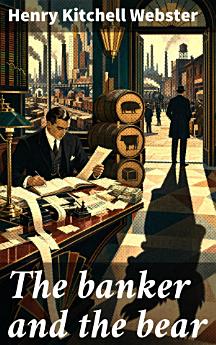
The banker and the bear: The story of a corner in lard
Henry Kitchell Webster
Jun 2026 · Good Press
Ebook
164
Pages
family_home
Eligible
info
About this ebook
Henry Kitchell Webster's The Banker and the Bear is a lively early twentieth-century novel that brings together finance, frontier energies, and social comedy in a distinctly American mode. The book explores the collision between urban capital and rough local life, using the figure of the banker and the symbolic force of the "bear" to dramatize questions of risk, character, and modern ambition. Webster writes with clarity, wit, and a firm sense of narrative economy; his prose reflects the transitional literary culture of popular realism, where business ethics, romance, and regional observation are woven into an entertaining but morally attentive story. Webster was a prolific American novelist and dramatist whose fiction often examined contemporary institutions, especially commerce, class, and domestic life. Writing in an era when the United States was rapidly redefining itself through expansion, speculation, and professionalization, he developed a keen interest in how ordinary individuals were shaped by financial and social systems. Such concerns make The Banker and the Bear especially characteristic of his career, revealing his ability to turn the mechanisms of business into material for sharp, accessible fiction. This is a rewarding book for readers interested in American realism, the cultural imagination of money, and the understated craftsmanship of neglected popular fiction. It deserves renewed attention for its intelligence, humor, and historically revealing portrait of a society learning to measure value in both moral and economic terms.
Henry Kitchell Webster's The Banker and the Bear is a lively early twentieth-century novel that brings together finance, frontier energies, and social comedy in a distinctly American mode. The book explores the collision between urban capital and rough local life, using the figure of the banker a...
Discover more
Rate this ebook
Tell us what you think.
Reading information
Smartphones and tablets
Install the Google Play Books app for Android and iPad/iPhone. It syncs automatically with your account and allows you to read online or offline wherever you are.
Laptops and computers
You can listen to audiobooks purchased on Google Play using your computer's web browser.
eReaders and other devices
To read on e-ink devices like Kobo eReaders, you'll need to download a file and transfer it to your device. Follow the detailed Help Center instructions to transfer the files to supported eReaders.


