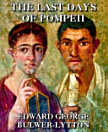
Last Days of Pompeii
2021년 8월 · Phoemixx Classics Ebooks
eBook
577
페이지
family_home
적용 가능
info
eBook 정보
Last Days of Pompeii - Baron Edward Bulwer Lytton - The Last Days of Pompeii is a novel written by the baron Edward Bulwer-Lytton in 1834. The novel was inspired by the painting The Last Day of Pompeii by the Russian painter Karl Briullov, which Bulwer-Lytton had seen in Milan. Once a very widely read book and now relatively neglected, it culminates in the cataclysmic destruction of the city of Pompeii by the eruption of Mount Vesuvius in AD 79. The novel uses its characters to contrast the decadent culture of 1st-century Rome with both older cultures and coming trends. The protagonist, Glaucus, represents the Greeks who have been subordinated by Rome, and his nemesis Arbaces the still older culture of Egypt. Olinthus is the chief representative of the nascent Christian religion, which is presented favourably but not uncritically. The Witch of Vesuvius, though she has no supernatural powers, shows Bulwer-Lytton's interest in the occult a theme which would emerge in his later writing, particularly The Coming Race.
Last Days of Pompeii - Baron Edward Bulwer Lytton - The Last Days of Pompeii is a novel written by the baron Edward Bulwer-Lytton in 1834. The novel was inspired by the painting The Last Day of Pompeii by the Russian painter Karl Briullov, which Bulwer-Lytton had seen in Milan. Once a very widely...
콘텐츠 둘러보기
저자 정보
Edward George Earle Lytton Bulwer-Lytton, 1st Baron Lytton PC, was an English novelist, poet, playwright, and politician. Lord Lytton was a florid, popular writer of his day, who coined such phrases as "the great unwashed", "pursuit of the almighty dollar", "the pen is mightier than the sword", and the infamous incipit "It was a dark and stormy night."He was the youngest son of General William Earle Bulwer of Heydon Hall and Wood Dalling, Norfolk and Elizabeth Barbara Lytton, daughter of Richard Warburton Lytton of Knebworth, Hertfordshire. He had two brothers, William Earle Lytton Bulwer (17991877) and Henry, afterwards Lord Dalling and Bulwer.Lord Lytton's original surname was Bulwer, the names 'Earle' and 'Lytton' were middle names. On 20 February 1844 he assumed the name and arms of Lytton by royal licence and his surname then became 'Bulwer-Lytton'. His widowed mother had done the same in 1811. His brothers were always simply surnamed 'Bulwer'.
Edward George Earle Lytton Bulwer-Lytton, 1st Baron Lytton PC, was an English novelist, poet, playwright, and politician. Lord Lytton was a florid, popular writer of his day, who coined such phrases as "the great unwashed", "pursuit of the almighty dollar", "the pen is mightier than the sword", a...
이 eBook 평가
의견을 알려주세요.
읽기 정보
스마트폰 및 태블릿
노트북 및 컴퓨터
컴퓨터의 웹브라우저를 사용하여 Google Play에서 구매한 오디오북을 들을 수 있습니다.
eReader 및 기타 기기
Kobo eReader 등의 eBook 리더기에서 읽으려면 파일을 다운로드하여 기기로 전송해야 합니다. 지원되는 eBook 리더기로 파일을 전송하려면 고객센터에서 자세한 안내를 따르세요.