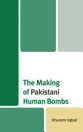
The Making of Pakistani Human Bombs
okt. 2015 · Bloomsbury Publishing PLC
Rafbók
230
Síður
Um þessa rafbók
A multi-level analysis of Pakistani human bombs reveals that suicide terrorism is caused by multiple factors with perceived effectiveness, vengeance, poverty, and religious fundamentalism playing a varying role at the individual, organizational, and environmental levels. Nationalism and resistance to foreign occupation appear as the least relevant factors behind suicide terrorism in Pakistan. The findings of this research are based on a multi-level analysis of suicide bombings, incorporating both primary and secondary data. In this study, the author also decodes personal, demographic, economic and marital characteristics of Pakistani human bombs. On average, Pakistani suicide bombers are the youngest but the deadliest in the world, and more than 71 percent of their victims are civilians. Earlier concepts of a weak link linking terrorism with poverty and illiteracy do not hold up against the recent data gathered on the post-9/11 generation of fighters in Pakistan (in suicidal and non-suicidal categories), as the majority of fighters from a variety of terrorist organizations are economically deprived and semi-literate. The majority of Pakistani human bombs come from rural backgrounds, with very few from major urban centres. Suicide bombings in Pakistan remain a male-dominated phenomenon, with most bombers being single men. Demographic profiling of Pakistani suicide bombers, based on a random sample of 80 failed and successful attackers, dents the notion that American drone strikes play a primary role in promoting terrorism in all its manifestations. The study concludes that previous scholarly attempts to explain suicide bombings are largely based on Middle Eastern data, thus their application in the case of Pakistan can be misleading. The Pakistani case study of suicide terrorism demonstrates unique characteristics, hence it needs to be understood and countered through a context-specific and multi-level approach.
A multi-level analysis of Pakistani human bombs reveals that suicide terrorism is caused by multiple factors with perceived effectiveness, vengeance, poverty, and religious fundamentalism playing a varying role at the individual, organizational, and environmental levels. Nationalism and resistanc...
Uppgötvaðu meira
Um höfundinn
Khuram Iqbal is assistant professor of counter-terrorism at the National Defense University, Pakistan.
Khuram Iqbal is assistant professor of counter-terrorism at the National Defense University, Pakistan.
Gefa þessari rafbók einkunn.
Segðu okkur hvað þér finnst.
Upplýsingar um lestur
Snjallsímar og spjaldtölvur
Settu upp forritið Google Play Books fyrir Android og iPad/iPhone. Það samstillist sjálfkrafa við reikninginn þinn og gerir þér kleift að lesa með eða án nettengingar hvar sem þú ert.
Fartölvur og tölvur
Hægt er að hlusta á hljóðbækur sem keyptar eru í Google Play í vafranum í tölvunni.
Lesbretti og önnur tæki
Til að lesa af lesbrettum eins og Kobo-lesbrettum þarftu að hlaða niður skrá og flytja hana yfir í tækið þitt. Fylgdu nákvæmum leiðbeiningum hjálparmiðstöðvar til að flytja skrár yfir í studd lesbretti.